Kondoa Irangi Rock Paintings, Tanzania: A Visitor’s Guide to Ancient Rock Art
Tanzania is one of the richest tourist destinations in the world. The country has several tourist attractions ranging from natural, cultural, and archaeological sites; however, most of them are still not fully tapped. Most of these sites are located in remote areas, which makes it difficult for visitors to easily visit them; one of these sites is Kondoa Irangi.
Kondoa Irangi is located in Kondoa district, about 4 hours from Dodoma city, the political capital of Tanzania. A visit to the site with my fellow researchers from Savannas Forever Tanzania had an incredible adventure. With the assistance of Maulidi Rauna, the in-charge of the Kolo Antiquity Department, we managed to visit three sites in the hills of Mongomi and the antiquity museum. The antiquity museum house a collection of historical tools and information about the area’s ancestors are reserved and displayed. Paintings in the form of pictures and pictorial diagrams from other areas of central Tanzania regions are also displayed at the antiquity house.
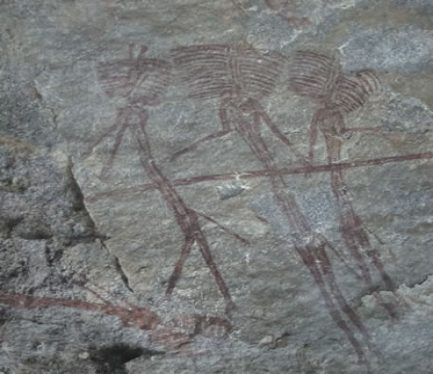
Paintings displaying people in sad situations
There are about 186 rock painting sites in Kondoa, distributed over 2,336 km². These sites were documented by Dr Mary Leakey and her husband, who were the earliest researchers to visit the area in the 1950s.
Most of the paintings are located on the hills, underneath or beneath the rocks. One area may contain more than one site closely located together. Somehow, the position of the paintings helps prevent rain and direct sunlight from reaching and destroying the paintings
The painting portrays;
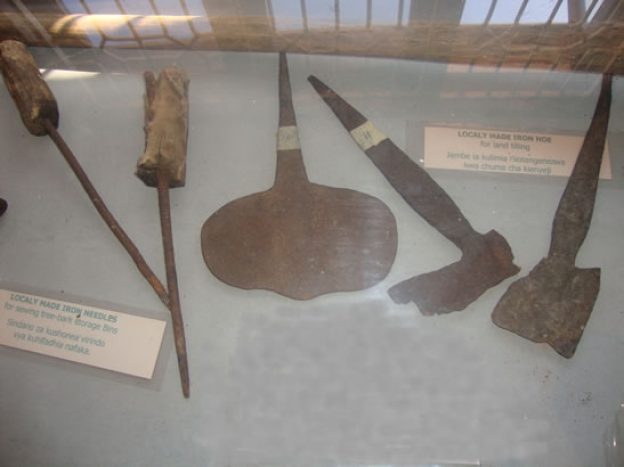
Some of the earliest tools displayed at the Antiquity Department at Kolo
As seen in the pictures, the paintings vary in terms of size, posture, colour, and the time at which they were drawn. The variation in size can be seen in paintings which portray people with large heads, who in some cases do not look like normal human beings. In terms of colour, black, white and red seem to dominate in most of the paintings. According to our guide, Mr Maulidi, most of the paintings are 800 to 3500 years old. It is still believed that these paintings are the work of the ancestors of the Sandawe and Hadzabe tribes.
It is still not known what kinds of materials were used to draw the paintings; however, it is believed that the material used could be a mixture of animal’s fat, soil and fig tree sap.
There were some initiatives to draw the same paintings using a mixture of different local plant saps, water, soil and even modern paints, with the hope of conserving the existing paintings. However, the efforts were fruitless, because most of the pigment faded and disappeared within a short period.
What do the paintings mean? The paintings portray the early life of the ancestors of Kondoa, and the animals shown may give us a clue of the existence of animals in the past that are not currently present due to various reasons.
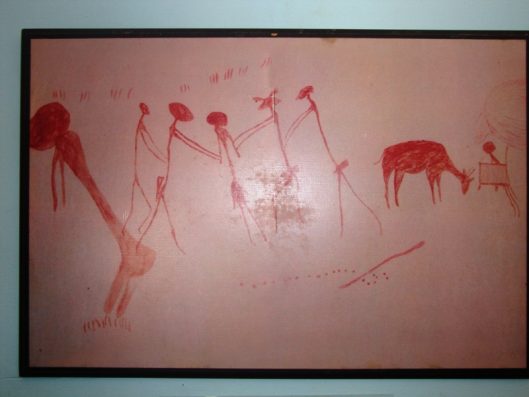
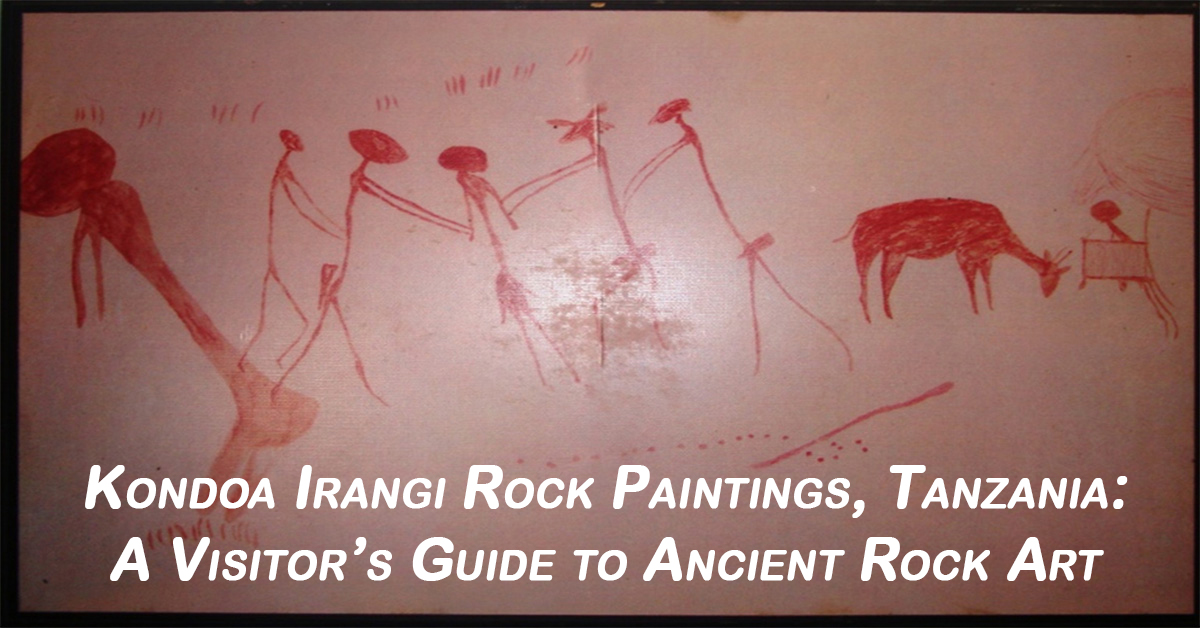
Pictorial form of the famous painting at Kolo B1: four men fighting over a woman at the centre, two men on the right wearing masks pulling the woman off, while two unmasked men holding her back.
In 2006 United Nations Educational, Scientific and Cultural Organisation (UNESCO), declared the Kondoa-Irangi paintings a World Heritage Site because the rock art sites at Kondoa are an exceptional testimony to the lives of hunter-gatherers and agriculturalists who have lived in the area over several millennia, and reflect a unique variation of hunter-gatherer art from southern and central Africa and a unique form of agro-pastoralist paintings
In addition, some of the rock art sites are still in active use by local communities for a variety of ritual activities such as rainmaking, divining and healing. These strong intangible relationships between the paintings and living practices reinforce links to the societies that created them and demonstrate a crucial cultural continuum.
According to the site management, the sites receive more than 100,000 visitors annually; most of the visitors are students, researchers and a few foreign tourists.
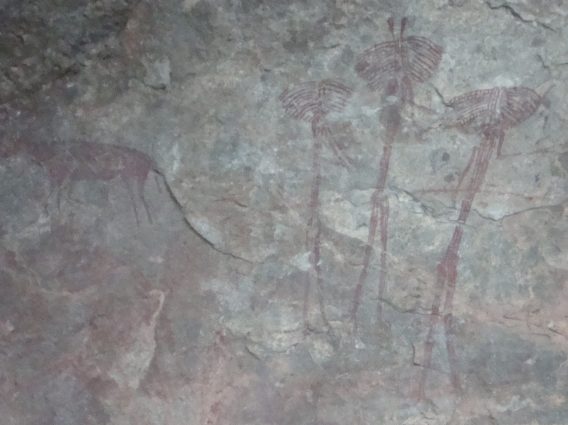
Display of people in hunting
How to get to the rock paintings
In order to reach the sites, a four wheel (drive) car is required because most of the paintings are located more than about 9km from Kolo museum. Also one needs to be physically fit to reach the sites because they are located on the hills where some walking and hiking is required. Depending on the direction of the site, it’s best to visit the sites in the morning or late in the evening because low sunlight enhances the paintings and lends a rich orange cast to the rock, making it best for taking excellent photos
At the time of our visit, visitors are required to take a guide from the Antiquity department office at kolo or a registered tour operator. Guides are very important to provide interpretations about the site.
In order to conserve the paintings for the benefit of both current and future generations, visitors to the site and the communities in general are reminded to adhere to the following principles set by the Antiquity department.
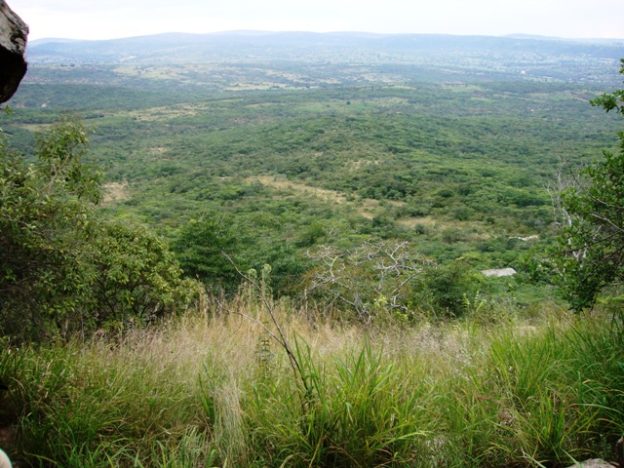
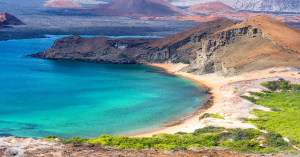
Spectacular view from top of Mongomi hills, (kolo site B1)
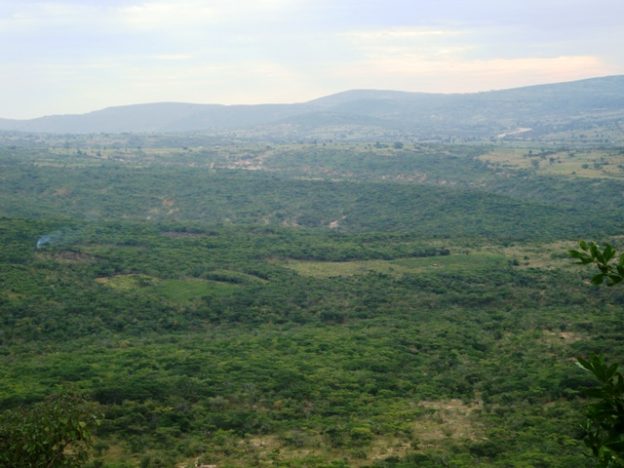 Some more view from the top of the sites at Mongomi Hill-Kolo
Apart from visiting the rock paintings, there are very beautiful sceneries, hot water springs, Ntomoko waterfalls and Kolo Forest, best for picnics and camping in Kondoa.
The recommended things to carry when visiting Kondoa Rock Paintings
Outfits
There is no specific dress code. However, having the right clothing (and equipment) can make the all the difference; the following outfits are recommended:
Other things to carry
Accommodation
Budget accommodations
Kondoa town, which is about 30 minutes, drives from the painting site offers budget accommodation. The price of these lodges ranges from 15 to 50 US$. Lodges in this town offer simple services such as hot showers, mosquito nets, air conditioning, a clean room and an en-suite bathroom. Some of these lodges include Kondoa Climax Hotel, Golden Apple Lodge and River Side Lodge.
High quality accommodations
For those who are looking for high-quality accommodation facilities, the nearby Dodoma city, the capital of Tanzania, which is about 3 to 4 hours from Kondoa Rock Paintings, offers typical 2 to 4 star hotels with splendid services. Some of the best lodges and hotels to consider when visiting Kondoa Rock Paintings are New Dodoma Hotel, Morena Hotel, St. Gasper Hotel and Royal Village Hotel.
St. Gasper Hotel
St. Gaspar Hotel and Conference Centre a tranquil setting and contemporary elegance is located about 7 km off Dodoma-Morogoro Highway, in the area known as Kisasa.
The hotel offers a perfect blend of comfort, elegance, and modern amenities. Whether you are visiting for business or leisure, the hotel provides spacious rooms, excellent dining, and fully equipped conference facilities to make your stay memorable.
The hotel offers a 24-hour front desk to make your visit even more pleasant. The property also features a pool and a lounge. Guests arriving by vehicle have access to parking.
New Dodoma Hotel
New Dodoma Hotel is a botanical oasis and conference centre located centrally in the midst of Tanzania’s bustling capital city, just minutes from downtown Dodoma and 2km Parliament Buildings of Tanzania. It is 4 km from Dodoma Airport.
New Dodoma Hotel offers exclusive services and benefits for the comfort of its guests, whether travelling for business or leisure. The hotel has standard, deluxe, executive and suite rooms. It offers personalised services, beautiful, clean rooms and a very good breakfast. It is located within easy reach of the city centre and offers shuttle service, a fitness centre, Free Wi-Fi connection, and secure parking at all times.
Morena hotel
Morena Hotel is situated in the Centre of the country, Dodoma, Tanzania. It is the capital’s newest hotel, where hospitality extends to offering you the best deal on superior accommodation.
Known for its comfort, professionalism, and commitment to guest satisfaction, the hotel has a great restaurant and is a stylish new property for a relaxing holiday or comfortable business trip.
Royal Village Hotel
Royal Village Hotel is a comfortable accommodation option in Dodoma, offering modern rooms, a restaurant, swimming pool, fitness centre, spa, sauna and barbershop.
It offers free Wi-Fi, flat-screen TVs, air-conditioning and private apartment verandas. Within the same premises, bars and a nightclub for nightlife in Dodoma.
The hotel also features conference facilities for meetings, weddings and special events, accommodating groups of 10 to 500 people. Guests can enjoy room service and arrange airport transfers or transport to local attractions.
The place is also the best for family gatherings as it offers a swimming pools and kids play ground.
Final thought
If one wants to visit this site, I highly recommend using the best guide for maximum adventure.