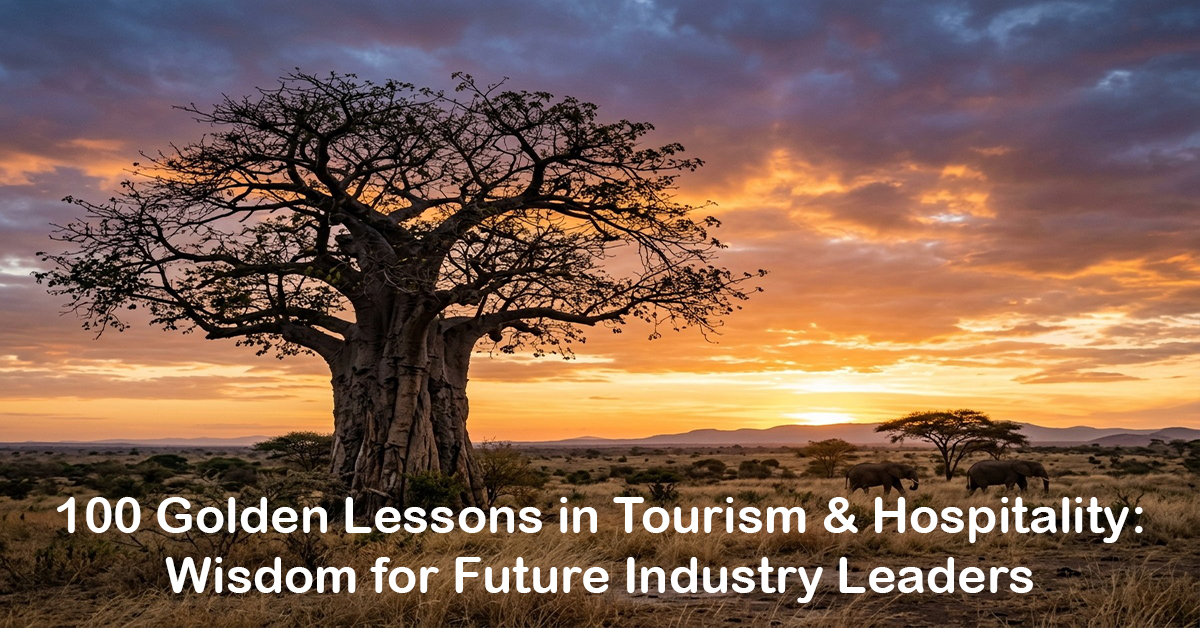
100 Golden Lessons in Tourism & Hospitality: Wisdom for Future Industry Leaders
These are practical pieces of wisdom suitable for tourism students, tour guides, hospitality professionals, travel entrepreneurs, and industry learners.
Every successful tourism professional starts with continuous learning. Whether you’re a tourism student, tour guide, hotel employee, or travel entrepreneur, investing in your knowledge will help you build a rewarding career. Explore recommended books, professional courses, and practical travel resources to continue your learning journey.
1. The Guest Remembers How You Made Them Feel
A guest may forget the room number, the meal, or the itinerary, but they will always remember whether they felt welcomed, respected, and valued. Hospitality is not only about providing a service; it is about creating emotions and memories.
2. A Great Guide Does Not Only Show Places; They Tell Stories
Tourists do not travel thousands of kilometres just to see landscapes. They want meaning. A skilled guide transforms a mountain, animal, building, or culture into a story that connects with the visitor.
3. Tourism Is Selling Experiences, Not Products
A hotel does not only sell beds. A safari company does not only sell transport and wildlife viewing. They sell dreams, emotions, adventure, discovery, and unforgettable moments.
4. Listen Before You Serve
The best hospitality professionals listen carefully before offering solutions. Understanding a guest’s needs, fears, expectations, and preferences allows you to provide a better experience.
5. A Smile Is the Cheapest Luxury
Luxury is not always expensive furniture or five-star facilities. A genuine smile, kindness, and personal attention can make an ordinary experience feel exceptional.
6. Treat Every Visitor Like a Future Ambassador
A satisfied traveller can recommend your destination to hundreds of people. Every guest interaction is an opportunity to market your country, company, or brand.
7. Details Create Excellence
Small things matter: remembering a guest’s name, offering assistance before being asked, preparing a clean environment, or providing useful local advice. Excellence is built from small details.
8. Tourism Professionals Are Storytellers
Facts inform visitors, but stories inspire them. Learn local history, traditions, legends, and personal experiences to make your interpretation memorable.
9. Never Stop Learning
The tourism industry changes constantly. New technology, travel trends, customer expectations, and sustainability practices require continuous learning.
10. Your Reputation Is Your Greatest Asset
A company can recover from many problems, but rebuilding trust after damaging its reputation is difficult. Always protect your name through honesty and quality service.
11. Hospitality Begins Before Arrival
The guest experience starts when they first see your website, read reviews, send an inquiry, or communicate with your staff.
12. A Good Review Is Earned, Not Requested
The best reviews come naturally when guests receive excellent experiences. Focus first on delivering value.
13. Know Your Destination Better Than Your Guests
A professional guide should know history, geography, wildlife behaviour, culture, safety procedures, and hidden attractions.
14. Respect Local Communities
Tourism should benefit local people. Respect their culture, traditions, environment, and way of life.
15. Problems Are Opportunities to Impress
A service failure handled professionally can create stronger loyalty than a perfect experience without challenges.
16. The Best Tour Guides Are Curious People
Curiosity drives research. Great guides constantly ask questions and discover new information.
17. Sell Solutions, Not Tours
Travellers do not buy a seven-day safari. They buy answers: adventure, relaxation, family memories, wildlife encounters, or cultural discovery.
18. Safety Comes Before Satisfaction
A beautiful experience is meaningless if guests feel unsafe. Professional tourism always prioritizes safety.
19. Learn Basic Psychology
Understanding human behaviour helps tourism professionals communicate better, manage complaints, and create personalised experiences.
20. Authenticity Wins
Modern travellers increasingly seek real experiences. Genuine culture, local food, and meaningful interactions create stronger memories than artificial attractions.
21. Be a Student of People
Every traveller has different motivations. Some seek adventure, others comfort, education, photography, or connection.
22. Your Attitude Determines Your Service Level
Skills can be trained, but attitude comes from personal commitment. Positive people naturally create better experiences.
23. Hospitality Is Everyone’s Responsibility
From drivers to managers, every employee influences the guest experience.
24. Protect the Environment You Depend On
Tourism relies on natural and cultural resources. Sustainable practices protect destinations for future generations.
25. A Destination Is More Than Attractions
A successful destination includes transport, accommodation, food, safety, culture, hospitality, and storytelling.
26. Technology Should Improve Human Connection
Use technology to make travel easier, but never allow it to replace genuine human interaction.
27. Know Your Competition
Understanding other destinations and businesses helps you improve your own services.
28. Never Promise What You Cannot Deliver
Honesty creates trust. Overpromising creates disappointment.
29. Learn From Every Guest
Visitors provide valuable feedback about your strengths and weaknesses.
30. Professionalism Creates Confidence
Appearance, communication, punctuality, and behavior influence how guests perceive your service.
31. Great Experiences Create Loyal Customers
A customer who has an emotional connection with your service is more likely to return and recommend you.
32. Communication Is a Tourism Superpower
Clear communication prevents misunderstandings and builds trust.
33. Learn From Other Cultures
Tourism connects people globally. Cultural awareness helps avoid mistakes and creates respect.
34. A Guide Should Be an Educator
Tour guiding is not only entertainment; it is also education.
35. Preparation Separates Professionals From Beginners
Successful tourism operators prepare routes, equipment, information, alternatives, and emergency plans.
36. Passion Is Contagious
When a guide loves nature, culture, or history, visitors feel that passion.
37. Hospitality Is About Serving With Pride
A job becomes a profession when people take pride in what they do.
38. Never Underestimate Local Knowledge
Local communities often hold information that cannot be found in books.
39. Create Moments, Not Just Services
A surprise, a personal touch, or a meaningful interaction can become the highlight of a trip.
40. Tourism Is About Human Connections
At its heart, tourism is about people meeting people.
41. The Customer Is Not Always Right, But Always Valuable
Respect guests even when solving disagreements. Professionalism matters.
42. Learn the Art of Storytelling
A good story has characters, emotions, challenges, and meaning.
43. Be Flexible
Travel involves weather changes, delays, and unexpected situations. Adaptability is essential.
44. Quality Creates Long-Term Success
Cheap services may attract customers once; quality creates loyal customers. Excellent customer service starts with preparation. Many professionals carry small travel essentials such as notebooks, power banks, translation apps, and professional attire to deliver outstanding guest experiences every day.
45. Your Local Culture Is Your Competitive Advantage
Every destination has unique traditions, food, history, and landscapes.
46. Never Ignore Online Reputation
Future travellers often trust online reviews before booking.
47. Invest in Your Skills
Training, reading, networking, and experience increase your professional value.
48. Hospitality Is a Language Everyone Understands
Kindness and respect cross all cultural and language barriers.
49. Learn From Mistakes
Every mistake is a lesson that can improve future performance.
50. Tourism Creates Memories That Last Forever
A successful tourism professional helps people experience moments they will remember for life.
51. The First Impression Opens the Door
Guests form opinions quickly. A clean environment, friendly greeting, and professional attitude create confidence from the beginning.
52. Understand Why People Travel
People travel for different reasons: adventure, relaxation, education, romance, business, healing, or discovery. Understanding motivation helps you design better experiences.
53. A Professional Guide Controls the Energy of the Group
The guide influences the mood of the journey. Confidence, enthusiasm, and calm leadership create a positive atmosphere. Every professional guide should invest in reliable equipment. Comfortable outdoor clothing, quality binoculars, reusable water bottles, sun protection, backpacks, and portable chargers make guiding safer and more enjoyable.
54. Never Stop Improving Your Destination Knowledge
Even familiar places have new stories, discoveries, and perspectives. Continuous research keeps your interpretation fresh.
55. Hospitality Is an Investment, Not an Expense
Money spent on staff training, cleanliness, service improvement, and guest satisfaction creates long-term returns.
56. Respect Time
Travellers have schedules, connections, and expectations. Being punctual shows professionalism and respect.
57. Food Is Part of the Travel Experience
Local cuisine tells stories about culture, history, geography, and traditions. Great tourism experiences include memorable food.
58. A Good Host Makes Guests Feel at Home
Hospitality is about creating comfort and belonging, even when people are far from home.
59. Learn the Power of Names
Using a guest’s name creates a personal connection and shows attention.
60. Tourism Requires Teamwork
Drivers, guides, chefs, hotel staff, managers, and communities must work together to create successful experiences.
61. Protect Wildlife Through Education
A knowledgeable guide not only shows animals; they teach visitors why conservation matters.
62. A Guide Represents the Entire Country
Visitors often judge a destination through their interaction with one person. Be a positive representative.
63. Never Fake Knowledge
If you do not know an answer, admit it and promise to find the correct information. Honesty builds credibility.
64. Learn Basic Financial Skills
Tourism professionals should understand budgeting, pricing, profit margins, and business management.
65. Marketing Begins With Great Service
The happiest customers become your strongest marketers through recommendations and reviews.
66. Create Experiences People Want to Share
The best tourism moments inspire travellers to tell stories and post memories online.
67. A Clean Environment Shows Respect
Cleanliness communicates professionalism, safety, and attention to detail.
68. Understand Different Traveller Types
Budget travellers, luxury travellers, families, solo travellers, and adventure seekers have different expectations.
69. Learn Foreign Languages
Even basic phrases in a visitor’s language can create friendship and trust.
70. Be Curious About Your Own Country
Many tourism professionals discover their own destinations only after visitors show interest in them.
71. The Best Tourism Businesses Solve Problems
Successful companies identify traveller challenges and create convenient solutions.
72. Trust Takes Years to Build and Seconds to Lose
Always act honestly because reputation is fragile.
73. Create Value Before Asking for Money
Helpful information, advice, and genuine assistance build customer confidence.
74. Tourism Is an Emotional Industry
People remember feelings more than facts. Create positive emotions.
75. Learn From Successful Destinations
Study places that attract millions of visitors and understand what makes them successful.
76. Be Responsible With Natural Resources
Tourism growth should not destroy the attractions that bring visitors.
77. A Good Manager Develops People
Strong leaders train, motivate, and support their teams. Great leaders continue learning from experienced professionals. Reading biographies, attending conferences, and participating in tourism workshops are excellent ways to develop leadership skills.
78. Understand Customer Expectations
Many complaints happen because expectations were not managed properly.
79. Communication Continues After the Trip
Following up with guests can create repeat customers and long-term relationships.
80. Innovation Keeps Tourism Alive
New ideas, technology, and creative experiences help destinations remain competitive.
81. Learn Photography and Visual Storytelling
Modern travelers are influenced by images. Understanding photography helps promote destinations better.
82. Every Destination Has a Story Waiting to Be Told
Even ordinary places can become attractive when presented with creativity and meaning.
83. Service Recovery Creates Loyalty
How you handle problems often matters more than whether problems happen.
84. Do Not Copy Others Completely
Successful tourism businesses adapt ideas while maintaining their own identity.
85. Build Relationships, Not Just Transactions
Strong relationships with guests, suppliers, communities, and partners create sustainable success.
86. Tourism Professionals Must Be Observers
Pay attention to guest behaviour, trends, and changes in the industry.
87. Train Your Team Like Your Reputation Depends on It
Because it does. Every employee affects customer experience.
88. Small Destinations Can Become Great Destinations
With proper marketing, storytelling, infrastructure, and hospitality, hidden places can attract global visitors.
89. Learn Digital Marketing
Websites, social media, search engines, email marketing, and online reviews influence modern tourism.
90. Your Knowledge Is Your Competitive Advantage
Equipment can be purchased, but experience and knowledge take time to develop.
91. Travel Creates Understanding Between People
Tourism connects cultures and helps people appreciate differences.
92. Never Forget the Human Element
Technology can improve travel, but kindness, empathy, and connection remain essential.
93. Be a Responsible Traveller and Professional
Respect nature, culture, communities, and local economies.
94. Passion Without Discipline Is Not Enough
Success requires enthusiasm combined with planning, consistency, and professionalism.
95. Learn From Every Journey
Every trip, guest, challenge, and experience provides a lesson.
96. The Best Tourism Professionals Are Lifelong Learners
Books, courses, mentors, and experiences continuously improve your career. The world’s best tour guides and hospitality professionals never stop learning. Reading industry books, taking online courses, and following tourism experts can help you stay ahead of industry trends and improve your career opportunities.
97. Create Experiences That Have Meaning
Modern travellers increasingly seek transformation, learning, and personal growth.
98. Tourism Is About Creating Stories People Tell Forever
The greatest achievement is when guests share your experience years later.
99. Serve People As If They Matter
Every visitor deserves respect regardless of nationality, budget, or background.
100. Tourism Is Not Only About Places; It Is About People
Destinations attract visitors, but people create unforgettable experiences. The heart of tourism is human connection, respect, and the desire to share the beauty of the world.
Recommended Books for Tourism Professionals
Hospitality: How to Become a Successful Trip Designer: A Step-by-Step Guide
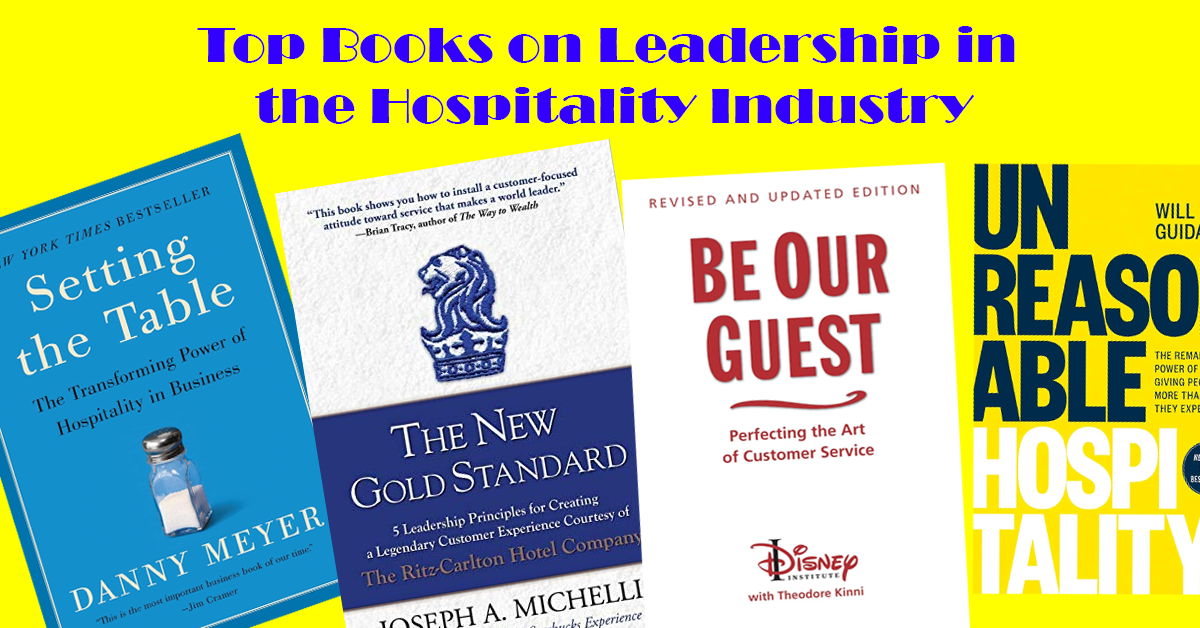
Leadership: Top Books on Leadership in the Hospitality Industry
Recommended Online Courses
Interested in growing your tourism career?
Explore these online learning opportunities offered at Udemy:
Sustainable Tourism: Sustainable tourism. A complete guide
Tour Guiding: How to become a Tour Guide
Customer Service Excellence: Excellence in Customer Service
Hospitality Management: Hospitality Management
Leadership Skills: Leadership Skills for a Hotel Manager: Lead with Confidence
-
Tourism Career Success Checklist
- ✓ Read one tourism book every month
- ✓ Take an online course
- ✓ Buy professional guiding clothing or Office attire
- ✓ Build your CV
- ✓ Practice foreign languages
- ✓ Learn first aid
- ✓ Visit new destinations
- ✓ Network with tourism professionals
- ✓ Follow industry news
- ✓ Attend tourism exhibitions