
The Story of Aman Resorts: How a Vision of Quiet Luxury Redefined Global Hospitality
Luxury has long been associated with glittering chandeliers, gold-plated interiors, extravagant buffets, and grand hotel lobbies designed to impress at first glance. Yet one hospitality brand quietly challenged that definition decades before the phrase “quiet luxury“ became a global trend. Aman Resorts transformed luxury into something deeply personal, emphasizing serenity, privacy, architectural harmony, and exceptional service rather than visible extravagance. While many hotel chains competed to build bigger properties with hundreds of rooms, Aman deliberately moved in the opposite direction, creating intimate sanctuaries where guests could disconnect from the noise of modern life.
Today, Aman operates some of the world’s most prestigious resorts and urban hotels across Asia, Europe, the Middle East, Africa, the Caribbean, and the Americas. Celebrities, entrepreneurs, royalty, and discerning travelers frequently choose Aman not because it is loud or fashionable, but because it consistently delivers experiences that feel timeless and deeply authentic. Industry experts often describe the brand as the gold standard of luxury hospitality, inspiring countless competitors to rethink their own approaches to guest experiences.
This article explores the fascinating story behind Aman Resorts, from its humble beginnings in Thailand to its evolution into one of the most influential hospitality brands in the world. Along the way, we’ll examine the philosophy, business strategy, architectural identity, and enduring legacy that have made Aman synonymous with quiet luxury.
The Origins of Aman Resorts
Luxury hospitality rarely begins with the ambition to become the biggest hotel company in the world. Aman’s story is different because it started with a desire to create a place where travelers could feel completely at peace rather than overwhelmed by opulence. The origins of the brand reflect a philosophy that prioritized emotional connection over commercial scale, a decision that would eventually redefine expectations across the luxury travel industry. While many hospitality businesses expanded rapidly during the late twentieth century, Aman focused on crafting a single unforgettable experience before considering growth.
The name “Aman“ comes from the Sanskrit word for peace, a choice that perfectly captures the company’s founding vision. Peace was not simply a marketing slogan but the central principle guiding every architectural decision, every guest interaction, and every location selected for future properties. From the beginning, Aman believed that genuine luxury meant giving travelers space, privacy, and tranquility rather than overwhelming them with unnecessary extravagance.
This philosophy attracted a unique clientele seeking experiences that felt authentic and restorative. Rather than advertising aggressively, Aman built its reputation through word-of-mouth recommendations from loyal guests who appreciated the brand’s understated elegance. That organic growth became one of Aman’s defining characteristics, helping establish an aura of exclusivity that remains unmatched today.
Adrian Zecha’s Vision for a Different Kind of Luxury
Adrian Zecha, an Indonesian-born hotelier and former journalist, founded Aman Resorts in 1988 after recognizing that many luxury hotels focused too heavily on grandeur while neglecting intimacy. His travels across Asia convinced him that travelers increasingly desired peaceful environments rooted in local culture rather than standardized international luxury.
Zecha envisioned resorts where architecture respected natural landscapes, service anticipated guests’ needs without becoming intrusive, and local traditions influenced everything from cuisine to interior design. Instead of creating destinations that could exist anywhere in the world, he wanted each Aman property to feel inseparable from its surroundings.
This vision challenged conventional hospitality wisdom. Rather than maximizing occupancy with hundreds of rooms, Aman deliberately built properties with relatively few accommodations, ensuring guests enjoyed exceptional privacy and personalized attention. That approach initially seemed financially risky but ultimately became one of the brand’s greatest competitive advantages.
The Birth of Amanpuri in Phuket, Thailand
The first Aman property, Amanpuri, opened on the west coast of Phuket, Thailand, in 1988. Nestled among coconut palms overlooking the Andaman Sea, the resort immediately distinguished itself through elegant pavilions inspired by traditional Thai architecture rather than conventional luxury hotel design.
Instead of constructing a massive beachfront complex, Amanpuri featured spacious standalone pavilions surrounded by lush tropical landscapes. Guests experienced privacy, quietness, and seamless indoor-outdoor living that reflected Thailand’s cultural heritage.
The success of Amanpuri proved there was strong demand for understated luxury. Guests returned repeatedly, not for entertainment spectacles or lavish décor, but for the rare feeling of calm that the resort provided. That success established the blueprint for every Aman property that followed.
Understanding the Philosophy of Quiet Luxury
The phrase quiet luxury has become one of the defining trends of modern lifestyle, fashion, and hospitality, but Aman embraced its principles decades before the term entered mainstream conversations. At Aman, luxury has never been about displaying wealth through extravagant architecture or flashy amenities. Instead, it revolves around creating an atmosphere where every detail contributes to a profound sense of calm. Guests are encouraged to slow down, reconnect with nature, and experience destinations in an authentic way rather than simply consuming them as tourist attractions. This philosophy influences everything from the layout of a suite to the way staff members interact with visitors.
Unlike many five-star hotels that seek to impress immediately with towering lobbies and elaborate décor, Aman properties often reveal themselves gradually. Pathways wind through gardens, courtyards frame breathtaking landscapes, and interiors use natural materials such as stone, timber, linen, and handcrafted textiles. The result is an environment that feels timeless rather than trendy. Luxury is communicated through craftsmanship, proportion, and thoughtful design instead of ornamentation.
This restrained approach also creates emotional value. Guests often describe feeling genuinely relaxed within hours of arrival because the environment removes unnecessary distractions. Technology remains available when needed, but it rarely dominates the experience. Instead, panoramic views, tranquil pools, private terraces, and carefully curated spaces encourage mindfulness and reflection. As architect John Pawson once observed, “Simplicity requires enormous discipline.” Aman embodies that principle by stripping away excess while preserving every element that enhances comfort and beauty.
The growing popularity of quiet luxury across industries has only reinforced Aman’s position as a pioneer. Long before minimalist fashion brands or understated interior design became fashionable, Aman demonstrated that true exclusivity often whispers instead of shouting.
Privacy Over Prestige
Privacy is perhaps Aman’s most recognizable hallmark. While other luxury resorts emphasize bustling social scenes, Aman creates environments where guests can enjoy complete discretion. Many properties feature only a few dozen suites or villas, allowing staff to know guests personally while maintaining an unobtrusive presence.
This commitment has made Aman particularly attractive to public figures, business leaders, and travelers seeking refuge from constant visibility. Celebrity guests frequently choose Aman not because it offers red-carpet treatment but because it allows them to experience destinations without unnecessary attention. Privacy is carefully integrated into architectural planning through secluded pathways, individual pavilions, landscaped gardens, and generous spacing between accommodations.
Service follows the same philosophy. Staff anticipate preferences through observation and thoughtful preparation rather than repeated interruptions. A favorite breakfast may appear without being requested again, or a preferred activity may already be arranged before the guest asks. Such gestures create an atmosphere of effortless hospitality rather than theatrical service.
Prestige certainly accompanies the Aman name, but it emerges naturally from consistency rather than marketing spectacle. Guests value the sense of trust that comes from knowing they can expect tranquility regardless of whether they are visiting Japan, Italy, Morocco, or Utah. That confidence has cultivated remarkable guest loyalty, with many travelers planning entire vacations around Aman destinations.
Architecture That Blends With Nature
Architecture has always been central to Aman’s identity. Instead of dominating landscapes, Aman properties are designed to become extensions of them. Hillsides, forests, coastlines, deserts, and historic villages shape the architecture rather than the other way around.
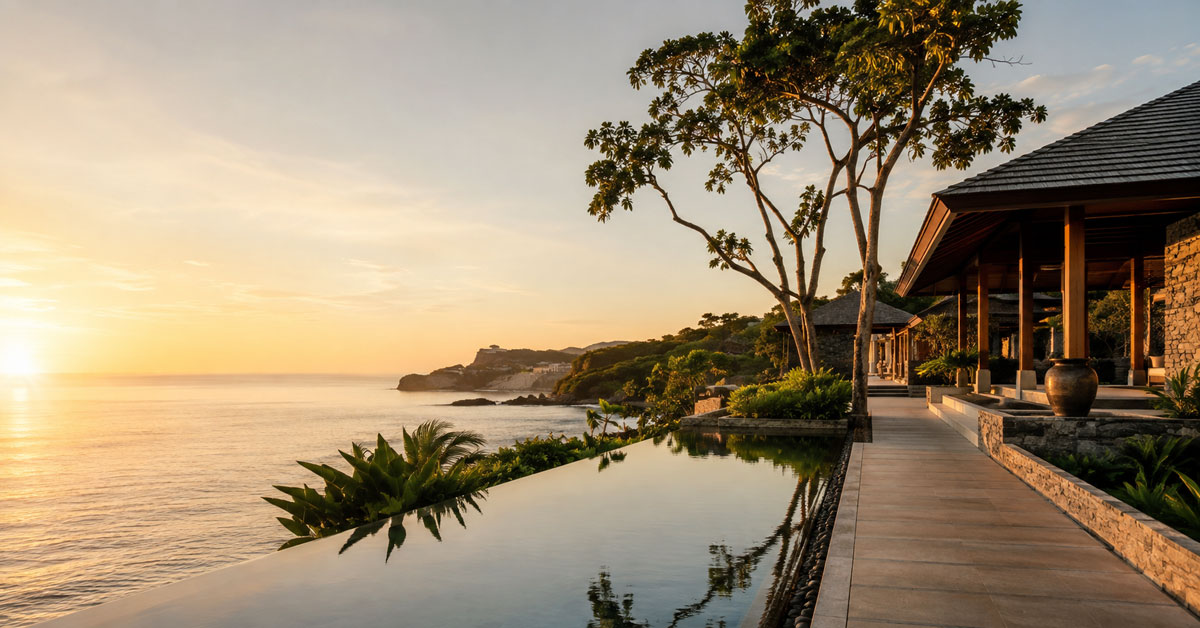
Buildings frequently employ locally sourced materials and traditional construction techniques, creating a strong connection between each resort and its cultural setting. Large windows frame natural vistas, while open-air courtyards, reflecting pools, and shaded terraces dissolve the boundary between indoor and outdoor spaces. This approach encourages guests to experience the surrounding environment as an integral part of their stay.
Sustainability also benefits from this philosophy. Respecting topography often minimizes environmental disruption, and many Aman resorts incorporate passive cooling, native landscaping, and conservation initiatives suited to their regions. While luxury hospitality can sometimes be criticized for excessive consumption, Aman increasingly demonstrates that environmental sensitivity and premium experiences can coexist.
The emotional effect is equally important. Guests rarely remember a building solely because it was expensive; they remember how it made them feel. Aman’s architecture consistently evokes serenity, balance, and belonging—qualities that transform accommodation into an experience rather than merely a place to sleep.
Aman’s Expansion Across the Globe
After the remarkable success of Amanpuri, expansion became inevitable, but Aman rejected the rapid-growth strategy that many hospitality companies pursue. Instead of opening dozens of hotels every few years, the brand selected locations with extraordinary care, ensuring that each new property could uphold its founding philosophy. This deliberate pace preserved exclusivity while allowing each resort to develop its own identity rooted in local culture and landscape.
Throughout the 1990s and early 2000s, Aman established properties across Southeast Asia, gradually extending into the Himalayas, Indonesia, Cambodia, Bhutan, and Sri Lanka. Eventually, the portfolio expanded into Europe, North America, the Caribbean, Africa, and the Middle East. Every destination reflected the same commitment to peace, privacy, and architectural harmony while embracing regional traditions instead of imposing a standardized corporate design.
Industry analysts frequently point to Aman’s disciplined expansion as one of the reasons for its enduring reputation. Rather than chasing market share, the company focused on maintaining quality and protecting its brand identity. According to public reports, Aman now operates or has projects in more than 20 countries, with a growing portfolio of resorts, urban hotels, branded residences, and wellness-focused developments.
This measured growth has strengthened customer loyalty. Returning guests know that each Aman property will feel distinct yet unmistakably connected through a shared philosophy. That consistency is remarkably difficult to achieve in global hospitality, where expansion often dilutes brand character.
From Asia to Europe, Africa, and the Americas
Aman’s international expansion illustrates how a clear philosophy can transcend geography. Whether overlooking the rice terraces of Bali, the canals of Venice, the deserts of Utah, or the mountains of Bhutan, each property reflects its surroundings instead of replicating a corporate template.
Examples include Aman Venice, housed within a historic palazzo on the Grand Canal; Amangiri in Utah, celebrated for its dramatic desert architecture; and Aman Tokyo, which combines Japanese aesthetics with contemporary urban sophistication. Each destination offers a unique interpretation of luxury while remaining faithful to the brand’s emphasis on tranquility and discretion.
This diversity has broadened Aman’s appeal. Travelers can experience vastly different cultures without sacrificing the quality and serenity they associate with the brand. As a result, many loyal guests actively seek new Aman properties rather than returning repeatedly to a single destination.
Choosing Extraordinary Locations
Location selection is among Aman’s most carefully guarded strengths. Rather than prioritizing busy tourist districts, the company often seeks places of exceptional natural beauty, historical significance, or cultural richness. Remote islands, mountain valleys, protected deserts, ancient cities, and secluded coastlines frequently become the foundation for new developments.
This strategy creates memorable experiences while reducing competition with conventional luxury hotels clustered in urban centers. It also allows architecture to engage directly with dramatic landscapes, reinforcing the sense of escape that defines the Aman experience.
The result is a portfolio where destinations themselves become part of the attraction. Guests are not merely booking accommodation—they are gaining access to environments that inspire reflection, exploration, and a deeper appreciation for the places they visit.
The Design Language That Defines Aman
One of the reasons Aman has achieved an almost legendary status in luxury hospitality is that its properties are instantly recognizable without ever looking identical. That may sound like a contradiction, but it is precisely what sets the brand apart. Instead of creating a standardized architectural formula that is repeated around the world, Aman has developed a design philosophy built around harmony, restraint, and respect for place. Every resort reflects the culture, climate, and history of its location while maintaining the calm, understated elegance guests expect from the brand. This delicate balance requires exceptional planning and collaboration between architects, designers, artisans, and local communities.
Walking into an Aman property rarely feels like entering a conventional hotel. There are no overwhelming chandeliers, crowded reception halls, or dramatic displays intended to impress at first glance. Instead, guests often arrive through quiet courtyards, landscaped pathways, or intimate entrance spaces that gradually reveal the beauty of the property. This intentional pacing creates a sense of discovery rather than spectacle. The architecture encourages visitors to slow down and become aware of their surroundings, transforming the act of arrival into part of the overall experience.
Natural materials are central to Aman’s identity. Stone, timber, bamboo, marble, clay, linen, and handcrafted textiles are selected not simply for aesthetics but for their ability to age gracefully and connect buildings to their environments. Large windows frame mountains, forests, oceans, or deserts like living works of art, while reflecting pools and gardens soften transitions between indoor and outdoor spaces. The result is architecture that feels timeless instead of fashionable, allowing each property to remain relevant long after design trends have changed.
Design also plays a practical role in enhancing guest well-being. Spacious layouts reduce visual clutter, natural light improves mood, and carefully considered acoustics preserve silence. Every detail—from the placement of furniture to the orientation of a suite—is intended to promote comfort without drawing attention to itself. Guests may not consciously notice these elements, but together they create the effortless sense of peace that has become synonymous with the Aman name.
Minimalism Inspired by Local Culture
Minimalism at Aman is not about empty rooms or cold modernism. Instead, it is a thoughtful expression of local traditions interpreted through a contemporary lens. Each property studies the architecture, craftsmanship, and cultural heritage of its destination before translating those influences into a refined hospitality experience.
For example, an Aman resort in Japan embraces the principles of traditional ryokan inns through clean lines, natural woods, and tranquil gardens. In Morocco, local stone, intricate craftsmanship, and shaded courtyards reflect centuries of architectural heritage. Resorts in Indonesia incorporate open pavilions, tropical landscaping, and indigenous materials that respond naturally to the climate.
This approach avoids the homogenization often associated with global hotel brands. Guests feel immersed in the character of a destination rather than isolated from it. Local artisans frequently contribute handcrafted furniture, ceramics, woven textiles, and decorative elements, ensuring each property possesses a genuine sense of place.
Minimalism also enhances functionality. By removing unnecessary decoration, attention shifts toward quality, proportion, texture, and natural beauty. Every object has a purpose, every space has room to breathe, and every design choice supports relaxation. Rather than overwhelming guests with visual complexity, Aman allows landscapes, craftsmanship, and light to become the true focal points of each resort.
Collaborations With World-Class Architects
Aman’s architectural excellence is the result of collaborations with some of the world’s most respected architects and designers. Over the years, the brand has worked with internationally acclaimed professionals such as Jean-Michel Gathy, Kerry Hill, Ed Tuttle, John Heah, and Kengo Kuma, among others. While each architect brings a unique creative perspective, they all embrace Aman’s guiding principles of simplicity, contextual design, and timeless elegance.
These partnerships produce buildings that feel both innovative and deeply rooted in their surroundings. Rather than pursuing bold architectural statements for publicity, Aman encourages architects to listen to the landscape. Mountains determine rooflines, coastlines influence room orientation, and native vegetation shapes pathways and gardens. The environment becomes an active participant in the design process rather than merely a backdrop.
One of the most celebrated examples is Amangiri in Utah, where the resort appears to emerge naturally from the surrounding sandstone formations. The architecture complements the dramatic desert landscape instead of competing with it. Similarly, Aman Tokyo reinterprets traditional Japanese aesthetics within a contemporary skyscraper, creating a peaceful retreat high above one of the world’s busiest cities.
These collaborations have earned Aman widespread recognition within both hospitality and architectural circles. The brand demonstrates that exceptional design is not about extravagance but about creating spaces that evoke emotion, respect culture, and endure for generations.
The Aman Guest Experience
Luxury hotels often compete by adding more amenities, larger spas, or increasingly elaborate entertainment. Aman has taken a remarkably different path. Its guest experience is built on the belief that true luxury is deeply personal and often invisible. Rather than dazzling visitors with endless activities or theatrical service, Aman focuses on anticipating individual needs, creating meaningful moments, and allowing guests the freedom to experience destinations at their own pace. This philosophy transforms hospitality into something that feels intuitive rather than transactional.
From the moment guests arrive, interactions are designed to be calm and seamless. Check-in procedures are discreet, staff introductions feel natural, and accommodations are prepared with thoughtful attention to personal preferences whenever possible. Returning visitors are often greeted by name, favorite beverages may already be waiting, and even subtle habits observed during previous stays can be remembered. These personalized touches create a sense of familiarity that encourages long-term loyalty.
Another defining characteristic of the Aman experience is the absence of unnecessary interruptions. Staff remain highly attentive but avoid imposing themselves on guests. Assistance is available instantly when requested, yet privacy is always respected. This balance requires extensive training and a deep understanding of hospitality, making Aman’s service model difficult for competitors to replicate successfully.
Beyond accommodation, Aman encourages meaningful engagement with local cultures and environments. Guests may explore ancient temples with expert historians, participate in guided nature walks, learn regional cooking techniques, or experience traditional wellness practices unique to each destination. These carefully curated activities provide richer memories than conventional sightseeing because they foster genuine cultural connections rather than passive observation.
Ultimately, the Aman experience is defined less by physical luxury than by emotional impact. Guests frequently describe leaving with a renewed sense of calm, inspiration, and appreciation for the destination they have visited. That emotional resonance has become one of the brand’s most valuable assets and one of the primary reasons travelers return again and again.
Personalized Service Without Excess
Service at Aman is intentionally understated. Staff members strive to anticipate needs before they arise while avoiding unnecessary formality or constant interaction. This approach creates an atmosphere that feels relaxed rather than overly scripted.
Because most Aman properties have relatively few rooms, team members can devote significant attention to each guest. Preferences for dining, wellness treatments, room arrangements, and daily schedules are often remembered throughout a stay, creating continuity without making guests feel observed.
The objective is not perfection for its own sake but genuine hospitality. Guests often recall small gestures—a favorite tea prepared without asking, an unexpected picnic arranged at a scenic viewpoint, or thoughtful recommendations tailored to their interests—as the moments that define their visit. These seemingly simple acts leave lasting impressions because they demonstrate authentic care rather than standardized luxury.
Wellness, Dining, and Cultural Immersion
Wellness has become an increasingly important pillar of the Aman brand. Most properties feature expansive spas offering treatments inspired by local healing traditions, alongside yoga, meditation, fitness programs, and holistic therapies. The emphasis is not solely on relaxation but on supporting long-term physical and mental well-being.
Dining follows a similarly thoughtful philosophy. Menus highlight seasonal ingredients, regional recipes, and locally sourced produce whenever possible. Instead of overwhelming guests with excessive choice, restaurants focus on quality, freshness, and authenticity. Whether enjoying Japanese kaiseki cuisine, Mediterranean seafood, or Thai specialties, meals reflect the cultural identity of the destination.
Cultural immersion completes the experience. Aman encourages guests to move beyond conventional tourism through private museum visits, artisan workshops, archaeological explorations, wildlife excursions, and interactions with local communities. These experiences deepen travelers’ understanding of the places they visit while reinforcing Aman’s belief that luxury should enrich the mind as much as it comforts the body.
Business Strategy Behind the Brand
Aman’s remarkable reputation is not simply the result of beautiful architecture or exceptional service. Behind every tranquil resort lies a carefully considered business strategy that has deliberately resisted many of the industry’s conventional growth models. While global hotel chains often compete by opening hundreds of properties across multiple market segments, Aman has consistently prioritized quality over quantity. This philosophy has allowed the brand to maintain an extraordinary level of exclusivity while preserving the standards that define its identity. Every expansion decision is measured not only by potential financial returns but also by whether a new property can genuinely embody the Aman experience.
Scarcity has become one of the brand’s greatest competitive advantages. Because Aman resorts are relatively few in number and often located in extraordinary destinations, they have developed an almost mythical status among luxury travelers. This rarity creates strong demand without relying heavily on traditional advertising campaigns. Instead, repeat guests, travel advisors, and word-of-mouth recommendations have historically generated much of the brand’s visibility.
Another important aspect of Aman’s strategy is its willingness to diversify carefully while remaining true to its core philosophy. In recent years, the company has expanded beyond resorts into urban hotels, branded private residences, wellness concepts, exclusive clubs, and luxury lifestyle offerings. These ventures provide additional revenue streams while strengthening customer loyalty. Homeowners within Aman Residences, for example, gain access to many of the same service standards and lifestyle experiences associated with the hotels.
The company has also embraced technology selectively. Digital systems improve reservations, personalization, and operational efficiency behind the scenes, yet they rarely interfere with the guest experience. Rather than replacing human interaction, technology supports staff in delivering more attentive and individualized service. This balanced approach reflects Aman’s broader philosophy: innovation should enhance tranquility, not disrupt it.
Limited Growth and High Exclusivity
Perhaps the most distinctive feature of Aman’s business model is its commitment to controlled expansion. Instead of pursuing aggressive development targets, the company evaluates each potential project against exceptionally high standards involving location, design, cultural relevance, and operational feasibility. Only sites capable of delivering the signature Aman experience move forward.
This restraint has protected the brand from one of the greatest challenges facing luxury hospitality: overexposure. As some premium hotel chains expanded rapidly, maintaining consistent service and design quality became increasingly difficult. Aman avoided many of these issues by limiting the pace of development and investing heavily in staff training, architectural excellence, and operational consistency.
Exclusivity also extends to pricing. Aman properties consistently rank among the most expensive accommodations in their respective markets, yet demand remains strong because guests perceive genuine value beyond material luxury. They are paying not merely for a room but for privacy, personalized service, exceptional locations, and a distinctive atmosphere that is difficult to replicate elsewhere.
Industry observers often cite Aman as an example of how disciplined brand management can create long-term value. Rather than maximizing occupancy at all costs, the company focuses on preserving its reputation, knowing that trust and consistency ultimately generate stronger customer loyalty and sustainable financial performance.
Financial Evolution and Ownership Changes
Like many influential hospitality brands, Aman has experienced several ownership transitions throughout its history. These changes reflect both the growing value of the brand and the significant investment required to develop world-class luxury properties.
After its founding by Adrian Zecha in 1988, Aman attracted increasing attention from international investors as its reputation expanded. Over the years, ownership passed through several investment groups before entrepreneur Vladislav Doronin, through OKO Group, became the company’s chairman and chief executive. Under his leadership, Aman has accelerated carefully planned expansion while maintaining the brand’s core philosophy of quiet luxury.
The company has invested heavily in new resorts, urban destinations, branded residences, and wellness initiatives. Flagship projects such as Aman New York, along with forthcoming developments in major international destinations, illustrate the brand’s ambition to evolve without compromising exclusivity. Industry analysts have also noted that Aman has attracted substantial institutional investment, reflecting confidence in the long-term strength of the luxury travel market.
Despite changes in ownership, the defining characteristics established by Adrian Zecha remain remarkably consistent. Peace, privacy, thoughtful design, and personalized service continue to guide every new project. This continuity demonstrates that strong brand values can endure even as leadership and investment structures evolve over time.
Aman’s Influence on the Luxury Hospitality Industry
Few hospitality brands have influenced the global luxury market as profoundly as Aman. Although its portfolio is considerably smaller than those of many international hotel groups, its impact extends far beyond the number of properties it operates. Over several decades, Aman has reshaped expectations surrounding luxury by proving that restraint, authenticity, and emotional well-being can be more compelling than visible extravagance. Today, many concepts that travelers take for granted—private villas, destination-inspired architecture, wellness-focused travel, and highly personalized service—owe part of their popularity to principles that Aman championed long before they became industry trends.
One of Aman’s greatest achievements has been changing the conversation around what luxury actually means. Historically, luxury hospitality often emphasized scale, lavish decoration, and extensive amenities designed to showcase wealth. Aman challenged that assumption by demonstrating that silence, privacy, and simplicity could deliver even greater emotional value. Instead of overwhelming guests with abundance, the brand carefully curated experiences that felt meaningful, restorative, and deeply personal.
Competitors quickly noticed this shift in consumer preferences. Over the past two decades, numerous luxury hotel brands have introduced smaller boutique properties, wellness retreats, locally inspired architecture, and customized guest experiences. While each company has interpreted these ideas differently, the broader movement reflects a significant transformation in hospitality philosophy—one that Aman helped initiate.
The brand has also influenced luxury real estate through Aman Residences, encouraging other hotel groups to integrate branded homes with hospitality services. This model appeals to affluent buyers seeking both investment value and access to premium lifestyle experiences. As a result, the boundaries between luxury hotels, private residences, wellness destinations, and exclusive clubs have become increasingly interconnected.
Aman’s influence reaches beyond hospitality into fashion, interior design, wellness, and even consumer culture. The widespread popularity of quiet luxury as a lifestyle concept mirrors values that Aman embraced from its very beginning: quality over excess, craftsmanship over logos, and authenticity over spectacle.
The Rise of Quiet Luxury as a Global Trend
Although the expression quiet luxury gained widespread attention in the early 2020s, the philosophy itself has guided Aman since its founding in 1988. The brand demonstrated decades ago that understated elegance could create stronger emotional connections than conspicuous displays of wealth.
This cultural shift has been visible across multiple industries. Luxury fashion increasingly emphasizes exceptional tailoring without prominent branding. High-end residential architecture favors natural materials and minimalist spaces. Wellness tourism prioritizes mindfulness, privacy, and personal transformation. In many respects, these trends reflect values Aman introduced to hospitality years earlier.
Travelers themselves have also changed. Many affluent guests now seek meaningful experiences instead of simply accumulating luxury possessions. Time, privacy, authenticity, and emotional well-being have become valuable commodities, particularly in an increasingly connected digital world. Aman anticipated these evolving priorities long before they became mainstream, positioning the brand at the forefront of contemporary luxury travel.
The continued popularity of Aman illustrates that genuine innovation often comes from understanding human desires rather than following temporary trends. By remaining faithful to its founding philosophy, the company has become more relevant—not less—as consumer preferences have evolved.
Lessons Other Luxury Brands Learned
Aman’s success offers valuable insights for businesses across the hospitality industry and beyond. One of the most significant lessons is that consistency builds stronger brands than rapid expansion. Every Aman property reflects the same commitment to peace, privacy, and thoughtful design, creating trust among loyal guests regardless of destination.
Another lesson involves the importance of authenticity. Rather than imposing identical aesthetics around the world, Aman celebrates local cultures, landscapes, and craftsmanship. This approach enriches guest experiences while strengthening relationships with surrounding communities.
The brand also demonstrates that emotional experiences create lasting value. Guests may forget the dimensions of a suite or the number of amenities available, but they remember how a place made them feel. By prioritizing serenity, personalized service, and meaningful cultural connections, Aman has cultivated extraordinary customer loyalty.
Perhaps the most enduring lesson is that luxury need not be loud. In a marketplace often driven by spectacle and competition for attention, Aman has shown that confidence, restraint, and exceptional execution can be even more powerful. Its influence continues to shape the future of hospitality, inspiring both established hotel groups and emerging boutique brands to rethink what true luxury really means.
Conclusion
The story of Aman Resorts is ultimately the story of a bold idea that challenged conventional wisdom. When Adrian Zecha opened Amanpuri in Phuket in 1988, he did not seek to build the world’s largest hotel company or redefine luxury through extravagance. Instead, he envisioned peaceful sanctuaries where architecture respected nature, service anticipated individual needs, and every detail encouraged guests to slow down and reconnect with themselves and their surroundings.
Over the decades, that vision has evolved into one of the most admired luxury hospitality brands in the world. Through carefully selected destinations, timeless design, personalized experiences, and disciplined expansion, Aman has maintained an extraordinary level of consistency while inspiring an entire industry to embrace the principles of quiet luxury. Its influence can be seen not only in hotels but also in architecture, wellness, branded residences, and broader lifestyle trends that increasingly value authenticity over excess.
As global travelers continue to seek meaningful experiences rather than material displays of wealth, Aman remains exceptionally well positioned for the future. Its commitment to privacy, cultural respect, sustainability, and thoughtful design ensures that the brand remains as relevant today as it was when the first guests arrived at Amanpuri more than three decades ago. In an ever-changing hospitality landscape, Aman has proven that true luxury is not defined by how much is offered, but by how deeply an experience resonates long after the journey ends